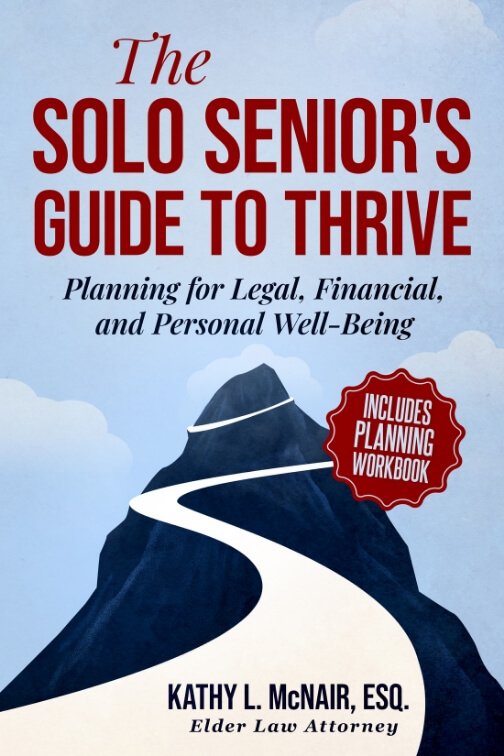
Written by Kathy McNair, an Elder Law Attorney, this book walks you through the steps to prepare for your future. It focuses on three main areas: legal, financial, and personal well-being, including tips, stories, and real-life examples. Everyone interested in planning can benefit from this book.
Why I wrote it:
“Early in my career, judges appointed me to serve as guardian and conservator for seniors who had no family and were facing a crisis. I walked into hospital rooms as a stranger, making critical decisions for people who had no one else. Those experiences shaped how I practice law today.
I have worked with thousands of clients, including many solo seniors aging without nearby children or close family. I have seen both the heartbreak of being unprepared and the peace of mind that comes from having a plan. The Solo Senior’s Guide to Thrive is everything I wish every solo senior knew before a crisis.